

Few travel moments create more anxiety than standing at baggage claim watching the carousel stop — and your suitcase never appears. It happens.
Before you panic, understand this: There is a system. There are rules. And you have rights.
Most baggage issues are resolved quickly. The key is knowing what to do — and documenting properly.
Step One: Report It Immediately
If your bag does not arrive:
- Go directly to the airline’s baggage service office before leaving the airport.
- File a written claim.
- Obtain a claim reference number.
- Keep copies of everything.
Do not rely on a verbal promise that “it will be delivered tomorrow.” Documentation matters.
Delayed Bags vs. Lost Bags
Most bags are not permanently lost — they are delayed. Airlines typically locate and deliver delayed bags within 24–48 hours.
During that delay, you are entitled to reimbursement for reasonable essential items such as toiletries and basic clothing. Keep receipts.
Airlines are required to reimburse reasonable, documented expenses related to the delay.
What the Law Says — U.S. Domestic Flights
For domestic flights within the United States, baggage liability is governed by federal regulation (14 CFR Part 254).
 Airlines are liable up to the Department of Transportation’s maximum per passenger for lost, delayed, or damaged baggage. That maximum is adjusted periodically for inflation. The current domestic liability limit is approximately $3,800 per passenger (subject to adjustment).
That figure represents the legal ceiling for documented, provable loss — not an automatic payout. Airlines are not required to pay for:
- Undocumented items
- Prohibited valuables placed in checked baggage
- Inflated or unsupported claims
But they are required to compensate legitimate, documented losses up to the legal maximum. To see airlines liability limits under the U.S. domestic baggage liability regulations, click here: 14 C.F.R. Part 254 — Domestic Baggage Liability. Make sure you save every receipt for anything you use buy because of los or delayed luggage.
International Flights: The Montreal Convention
If your itinerary includes international travel, the Montreal Convention applies. Under this international treaty, airlines are liable up to a defined limit (calculated in Special Drawing Rights, a standardized international currency measure).
 The practical takeaway is simple: International baggage claims also have defined compensation caps — but they differ from U.S. domestic rules.
To see airline liability limits under the Montreal Convention for the Unification of Certain Rules for International Carriage by Air, click here: International Flights: The Montreal Convention.
The Part Many Travelers Don’t Know
When your bag is missing, an airline may offer:
- A small cash advance
- A voucher
- A limited reimbursement amount
Before accepting any immediate payment, ask: “Does accepting this limit my ability to submit a full claim later?” Often, travelers unknowingly accept settlements that close their claim prematurely.
Remain calm. Ask questions. Understand what you are agreeing to.
Practical Steps I Take Before Every Major Trip
Before any long cross-country or international flight, I take a few simple precautions.
First, I photograph the contents of my suitcase before closing it — one photo of each side. That creates a visual record of what was packed and its condition before departure.
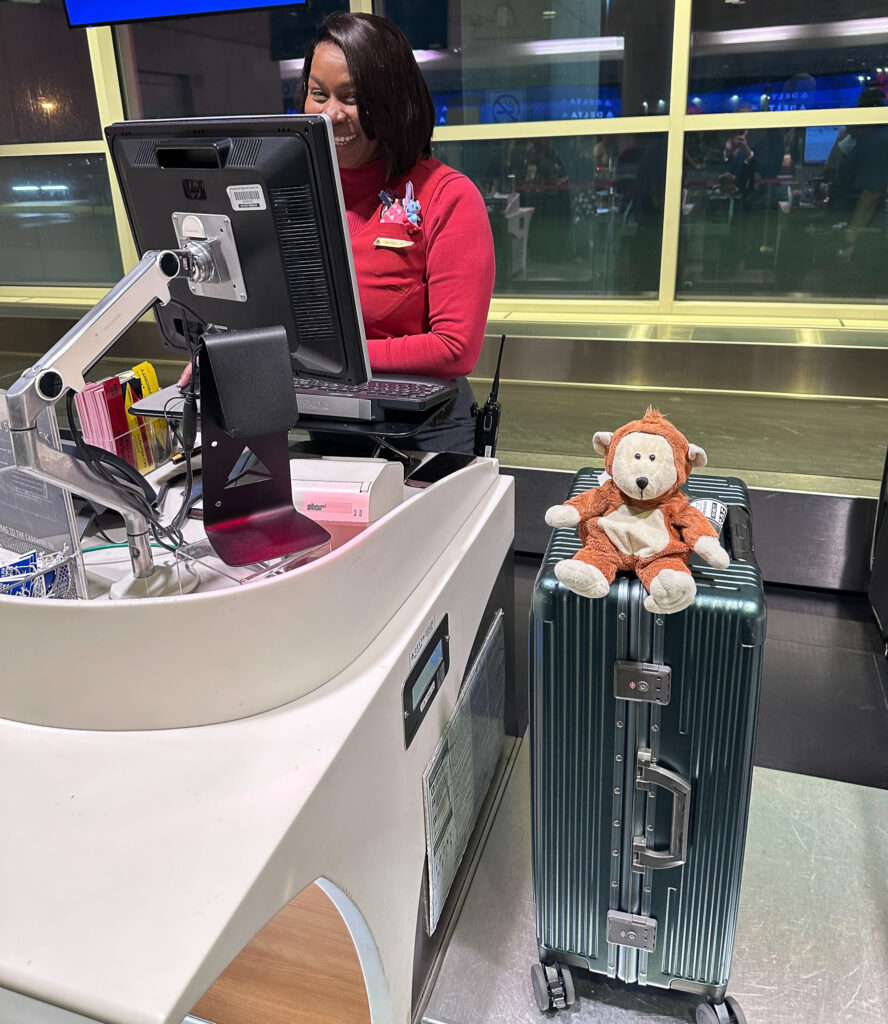 Second, at the airport — before checking the bag — I take a photo or short video of the exterior of the luggage. The airport environment establishes the date and location. That documentation shows the bag’s condition at the moment the airline accepted responsibility. If damage later occurs, there is no question whether it happened before or after check-in.
These steps take less than a minute and can make a significant difference.
Using an AirTag (or Similar Tracker)
I also place an AirTag inside my luggage.
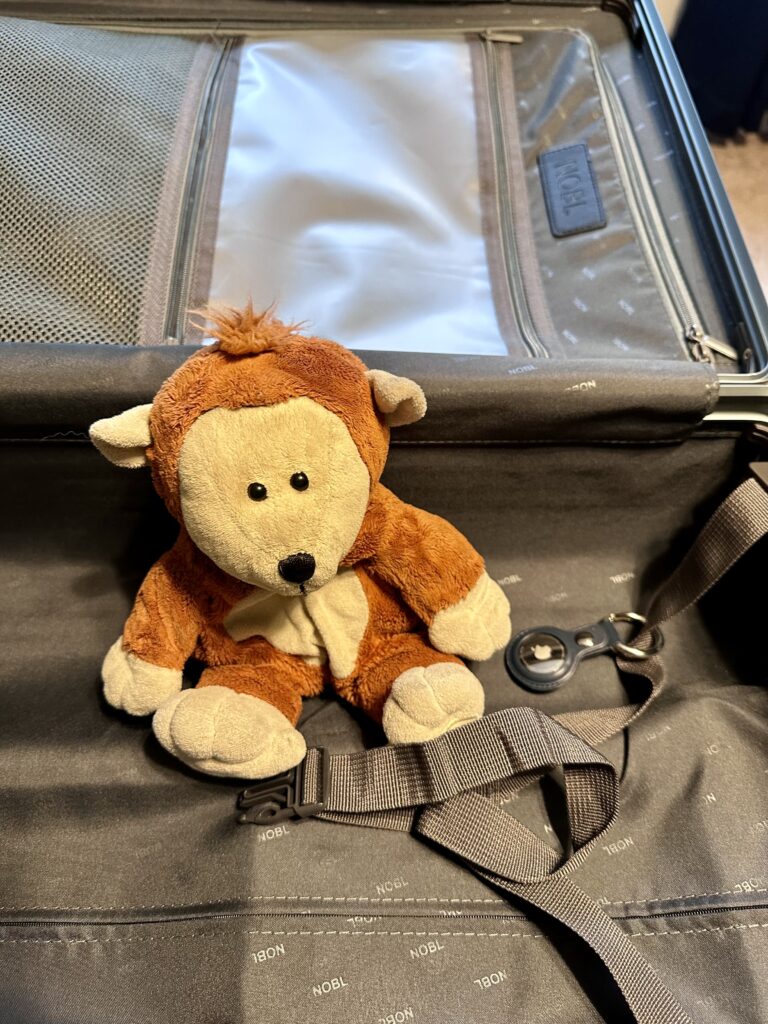 On one return trip from England, we landed in Atlanta from Paris and my bag never appeared at the international baggage carousel. Instead of speculating, I walked to the Delta baggage service desk and opened the “Find My” app on my phone. The AirTag showed my suitcase was still at Charles de Gaulle Airport.
That information allowed the agent to locate the bag quickly in the system. I tracked its movement from Paris to Atlanta to Louisville, where it was delivered to my home the following day. Because I was returning home, it was an inconvenience — not a catastrophe.
The AirTag did not replace the airline’s tracking system, but it provided clarity and peace of mind.
Documentation Works — A Real Example
Taking photos of my luggage has already proven useful.
On my return flight home from Portugal last year, I retrieved my suitcase at the Louisville airport and noticed one corner had been significantly damaged. Instead of arguing, I walked directly to the Delta baggage service office. I showed the agent:
- The physical damage.
- The photos I had taken of the exterior of my luggage in Lisbon before check-in.
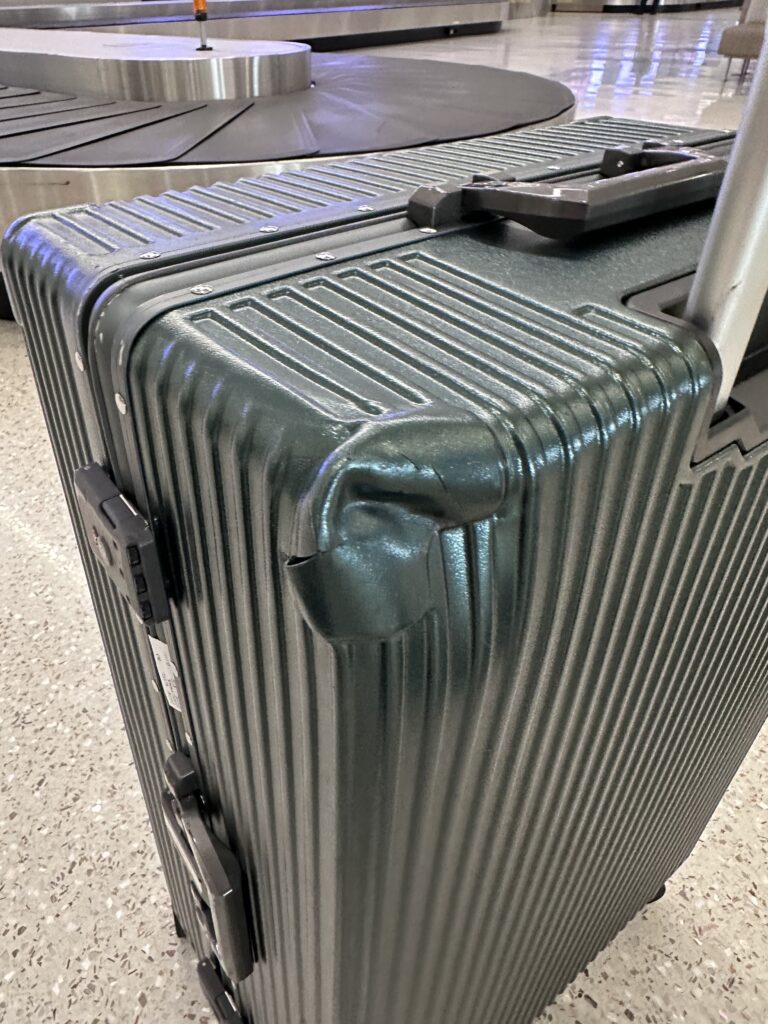 Those photos clearly showed the suitcase was undamaged when the airline accepted it. The agent submitted a damage claim immediately. I later uploaded my purchase receipt showing I had paid $260 for the Nobl suitcase. Approximately one week later, Delta deposited $260 directly into my bank account.
No confrontation, no escalation and no drama. Documentation made the process straightforward.
The Larger Lesson
Airlines are not looking to fight legitimate claims. But they do require documentation. When you can calmly demonstrate:
- The condition before departure
- The condition upon arrival
- The purchase value
Resolution becomes much simpler. Preparation reduces stress.
Lost or delayed baggage is frustrating., but it rarely requires panic. Report it promptly. Document everything. Submit your claim in writing. Remain calm.
Travel will occasionally test your patience. Preparation — and composure — will serve you far better than frustration.

Buddy and Jordan
Do you have a lost or delayed baggage incident? Leave your story in the comments below. And for more practical travel advice, join our Newsletter — new posts every week.