

LNER: My ideal way to travel England
There is a moment, somewhere between Newcastle and London, when the English countryside opens up outside your window and you realize you are exactly where you are supposed to be.
No airport security lines. No middle seats. Baggage is free. Just a comfortable chair, a view that keeps changing, and — if you’re traveling First Class — a pot of tea and a plate of crumpets that your English friends still haven’t quite forgiven you for ordering. More on that in a moment.
If you’ve never considered train travel as part of your UK itinerary, this post is for you. The LNER train is one of Britain’s premier long-distance rail operators, and for travelers exploring England and Scotland, it may be the single best way to get from one city to another.
What Is LNER?
LNER stands for London North Eastern Railway. It operates high-speed services along the East Coast Main Line — a route stretching 936 miles from London King’s Cross north through York, Newcastle, and Edinburgh, and beyond to Aberdeen and Inverness in Scotland.
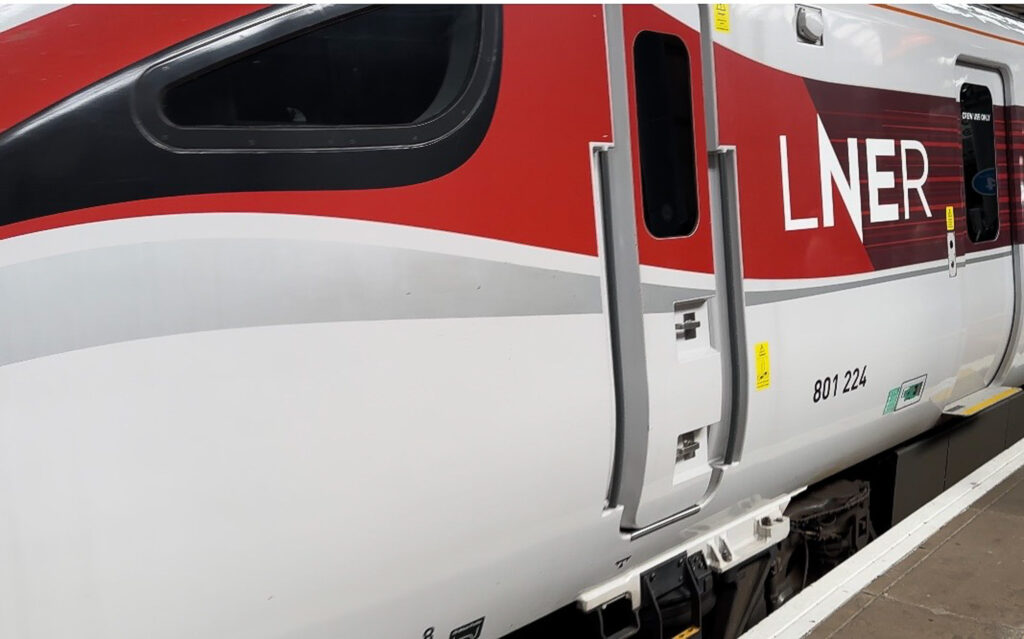
The backbone of the LNER fleet is the Azuma — a state-of-the-art train built in northeast England using technology derived from Japan’s famous bullet train. The Azuma travels at speeds of up to 125 mph, is quieter and more fuel-efficient than its predecessors, and offers a genuinely comfortable travel experience that is a world away from what most Americans expect from a train.
Why Train Travel Beats Flying Between UK Cities
Americans tend to default to flying everywhere. But for journeys between UK cities, the train is almost always the better choice.
Door to door, the train is often faster. Consider London to Edinburgh. A flight might take an hour in the air, but add getting to the airport, arriving two hours early, security, the gate, deplaning, baggage claim, and traveling from Edinburgh Airport into the city center — and you’ve spent most of the day. LNER’s London to Edinburgh journey takes just over four hours, and you arrive at Edinburgh Waverley Station right in the heart of the city. Step off the train and Edinburgh Castle is practically in front of you.
No baggage fees, no security lines. You board with your luggage. LNER allows up to three items — a small handbag, a carry-on, and one large suitcase — at no extra charge.
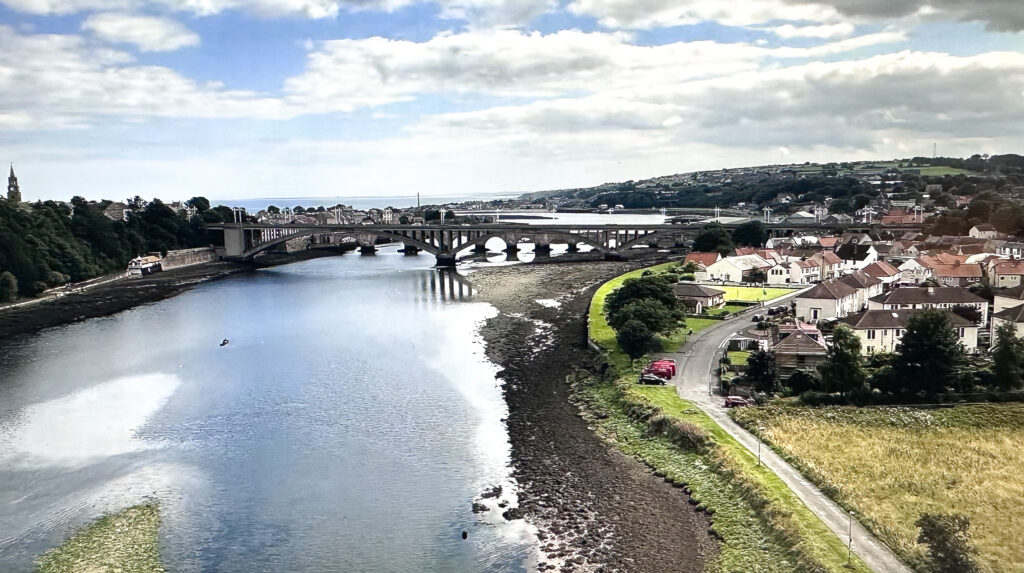
The scenery is the experience. The East Coast Main Line passes through some of the most beautiful landscapes in Britain — rolling hills, ancient stone villages, dramatic coastlines, and the outline of Durham Cathedral rising above the River Wear. These are views you cannot get at 35,000 feet.
Booking Your Tickets: Do It Early
LNER fares are dynamic — the earlier you book, the less you pay. Tickets open 90 days in advance and the cheapest seats sell quickly.
Advance tickets tie you to a specific train and offer savings of up to 47% off walk-up fares. If you know your schedule, this is how you save money. Anytime tickets are fully flexible but come at a significant premium. First Class tickets are available at Advance prices too, making an upgrade surprisingly affordable if you plan ahead.
Book directly at lner.co.uk or through the LNER app — no booking fees apply. The app stores your tickets digitally and allows seat selection. If your train is delayed 30 to 60 minutes, you receive a 50% refund; over an hour earns a full refund, claimable directly through the app.
The Case for First Class
I always travel First Class on LNER, and I’d encourage you to consider it — especially with an Advance ticket, where the price difference from Standard can be quite modest.
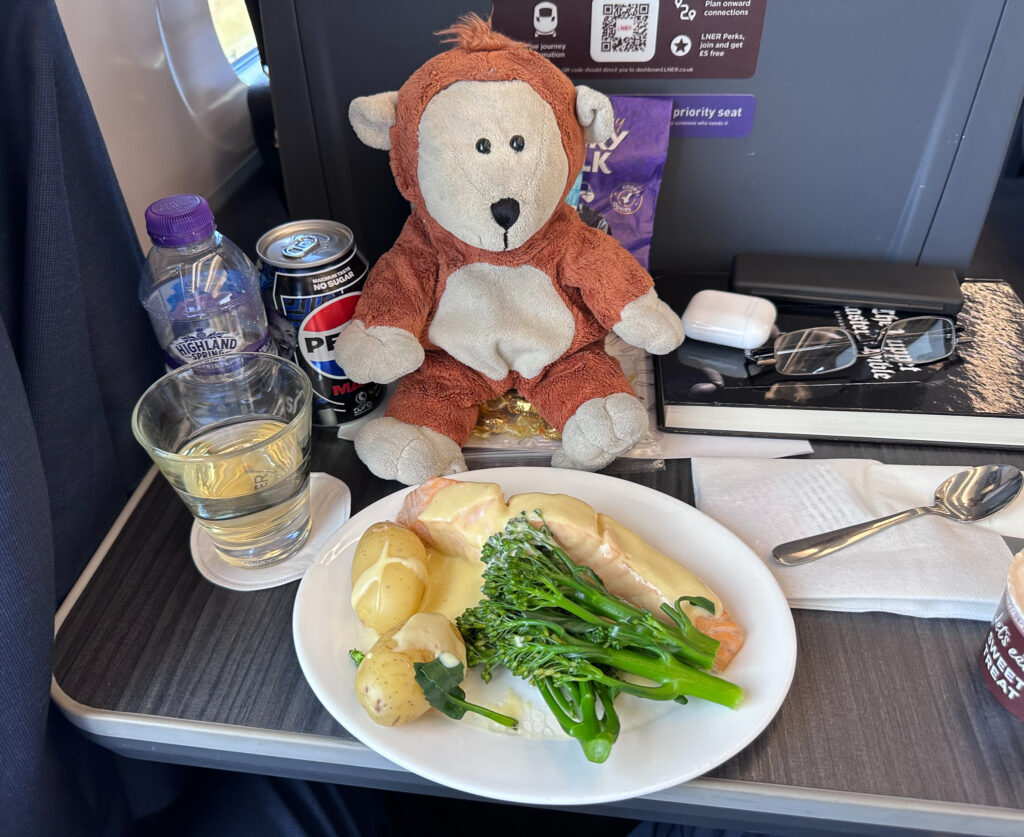
First Class includes complimentary at-seat dining throughout your journey. Menus change by time of day and direction of travel, and LNER sources food from local suppliers along the route — expect regional ingredients and genuine quality. Breakfast, lunch, and dinner are all included, along with hot and cold drinks and alcoholic beverages from late morning onward.

First Class lounges are available at London King’s Cross, Newcastle, Edinburgh, and several other stations for pre-journey relaxation with complimentary refreshments. Note that the King’s Cross lounge is currently closed for refurbishment through Spring 2026. Seats are wider and more spacious than Standard Class, with power sockets, USB charging, fast complimentary Wi-Fi, and a quieter, more relaxed atmosphere throughout.
Tea, Crumpets, and a Lesson in Traveling Authentically
On a journey from Newcastle to London, I was settled into my First Class seat when the host arrived with the breakfast menu. My English friends expected me to order something substantial. Instead, I ordered tea and crumpets. The reaction was immediate. They were aghast. Here I was in First Class, with the full menu at my disposal — and I’d chosen something as simple as tea and crumpets?
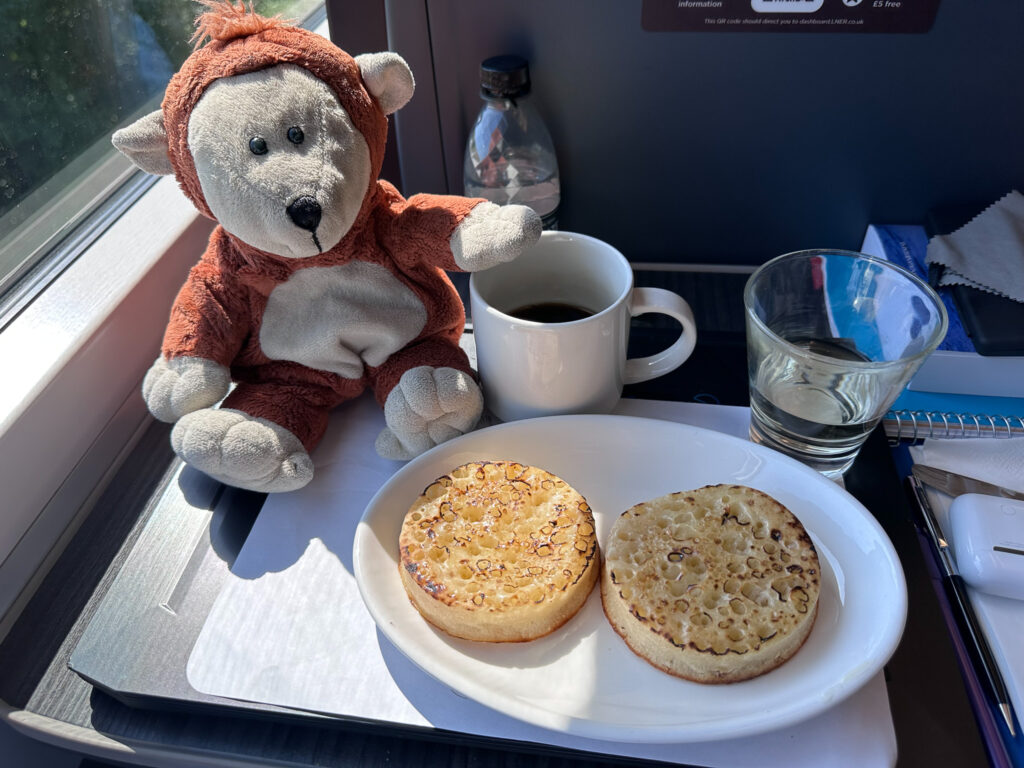
My answer was simple: we don’t have crumpets in America. I love them. And the idea of sitting in a comfortable First Class seat, watching the English countryside roll past the window, with a proper pot of tea and warm crumpets — that was exactly the experience I wanted. The crumpets were excellent. The tea was perfect. And that moment — simple, unhurried, and completely authentic — remains one of my favorite travel memories.
That’s the gift of train travel. It invites you to slow down and be present in a way that flying never does. There’s no countdown to landing, no seat belt sign to wait for. There’s just the journey itself, which turns out to be part of the destination.
Choosing the Right Seat for the Best Views
Traveling northbound toward Edinburgh, the right-hand side of the train offers the most spectacular scenery — Durham Cathedral, the crossing of the River Tyne approaching Newcastle, the Northumberland coastline, and the dramatic Royal Border Bridge just south of Berwick-upon-Tweed. Select your seat when booking through the LNER website or app.
The Cities Along the Way
London — the starting point for most American travelers and a world unto itself. King’s Cross is a magnificent station and a convenient base for exploring the city.
York — one of England’s most beautifully preserved medieval cities, with ancient city walls, the magnificent York Minster cathedral, and the National Railway Museum. Even a half-day stop is deeply rewarding.
Durham — a compact, stunning city built around its Norman cathedral, a UNESCO World Heritage Site. Watch for it on the right-hand side as you pass through heading north.
Newcastle — a vibrant, welcoming city with outstanding food, a spectacular waterfront, and easy access to Hadrian’s Wall, one of the great Roman monuments in the world.
Edinburgh — arguably the most beautiful capital city in Britain, with a dramatic castle, the historic Royal Mile, world-class museums, and some of the finest whisky bars you’ll ever visit.
Boarding the Train: What to Expect
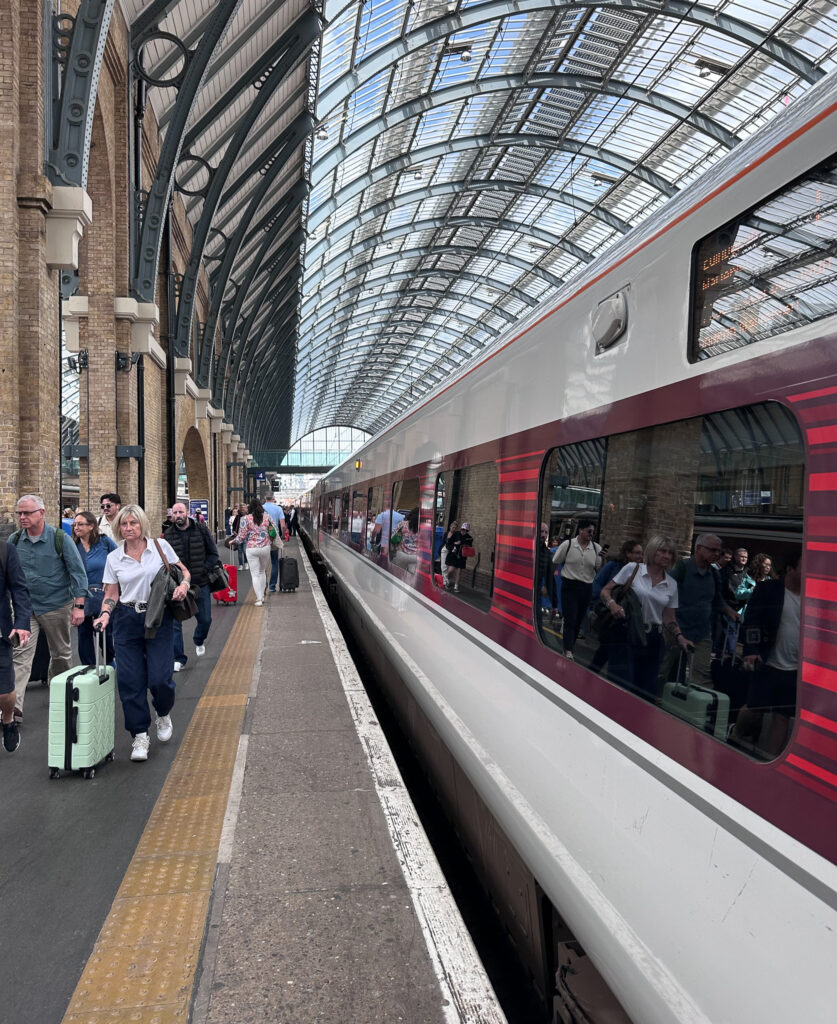
The boarding process on LNER is refreshingly straightforward compared to an airport. Find your platform — displayed on the departure boards in the station — make your way to the correct coach letter marked on the platform, and board when the train arrives. Your coach and seat number are on your ticket or in the LNER app.
My first recommendation: be at the platform when the train first arrives and board among the first passengers. This matters more than you might think, and here’s why.
Each carriage has an overhead rack above your seat for smaller bags and a luggage rack at the end of the car for larger suitcases. That end luggage rack fills up quickly once passengers start boarding. If you have large luggage and aren’t among the first on the train, you may find it already full and have to store your bag in a different carriage — which is inconvenient, and occasionally stressful at busy stations with short dwell times. Board early and claim your space.
One more thing to be aware of before you step on: there are two steep steps up into the train. It sounds minor, but if you’re managing heavy luggage, those steps deserve your full attention. My personal advice — and it works — is to load your luggage onto the train first, then climb up yourself. It is much easier than trying to wrestle a heavy bag up steep steps while boarding. Which brings me to the broader point: this is another excellent reason to pack lighter than you think you need to. Your back, your knees, and your travel companions will all thank you.
Assistance for Older and Mobility-Limited Travelers
LNER takes accessibility seriously, and there is genuine, practical help available for older travelers and those with mobility limitations. Here’s what you need to know.
Passenger Assist is a national system used by all UK train companies that allows LNER to make arrangements for your journey. If you have a disability, a non-visible impairment, any mobility limitation, or are simply an older traveler who would benefit from extra help, you can pre-book assistance. This covers help arriving at the station, boarding, making connections, and reaching your destination.
If you need step-free access onto the train, a member of station staff will deploy a ramp for boarding and alighting. The Azuma trains have a ramp that is less steep and more comfortable than older trains.
LNER’s Passenger Assist team helps with putting down the boarding ramp, offering sighted guidance, and helping those with mobility impairments manage their luggage.
To book assistance, call LNER’s Assisted Travel team at 03457 225 225, available Monday through Sunday, 8:00 AM to 10:00 PM. You can also book through the LNER website when purchasing your ticket. The key is to arrange this in advance — don’t wait until you arrive at the station.
Wheelchair spaces are available on all Azuma trains and can be booked when purchasing your ticket. Priority seats are also available for those with reduced mobility and can be reserved through Passenger Assist. Accessible toilets are located throughout each train near the wheelchair spaces.
If you have any doubt about whether you’d benefit from assistance, call ahead. LNER’s staff are trained to help, and there is no threshold of disability required to ask for support.
Practical Tips Before You Go
Book up to 90 days in advance for the best prices. Download the LNER app and store your tickets digitally — take a screenshot as a backup in case of poor signal when the conductor comes around. Sit on the right-hand side heading north for the best views. Pack lighter than you think you need to — those boarding steps are a good reminder. And if you’re traveling First Class, study the menu before you board. You may find yourself ordering something wonderfully simple that your traveling companions will never quite let you forget.
The Bottom Line
Train travel in England is not just a way to get from one city to another. It is, at its best, an experience in itself — comfortable, scenic, unhurried, and deeply connected to the landscape and culture of the country you’re visiting.
LNER is the finest expression of that experience on the East Coast Main Line. Whether you’re making a day trip to York, connecting Newcastle to Edinburgh, or simply watching England unfold outside your window over a pot of tea, it belongs on your itinerary.
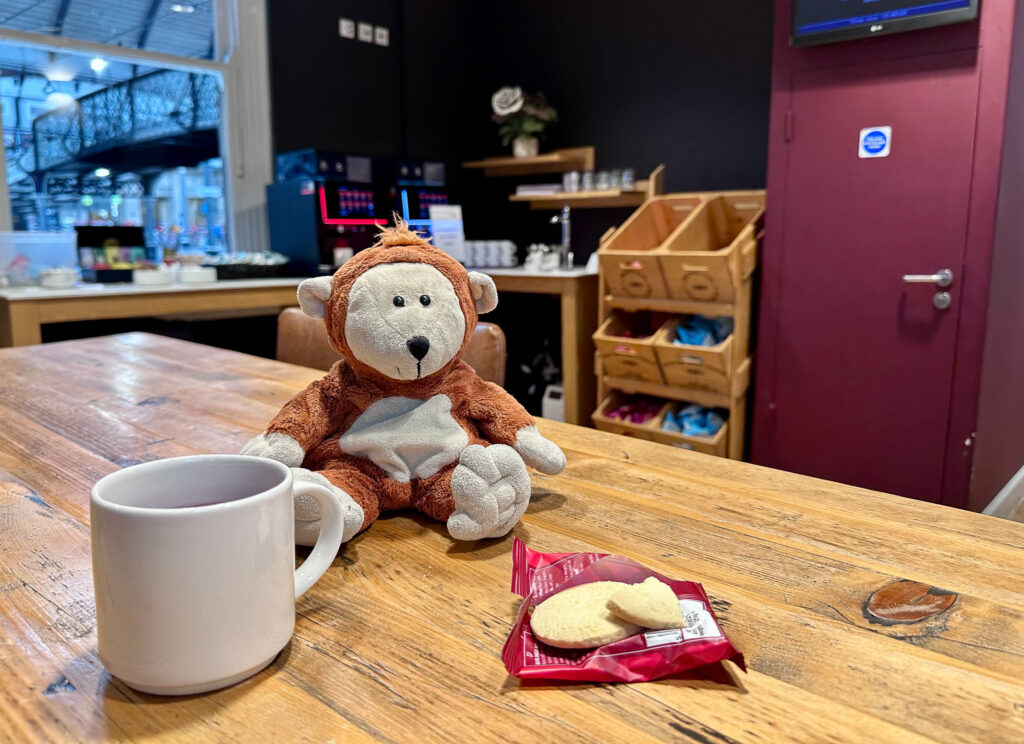
Buddy agrees. He had a window seat.
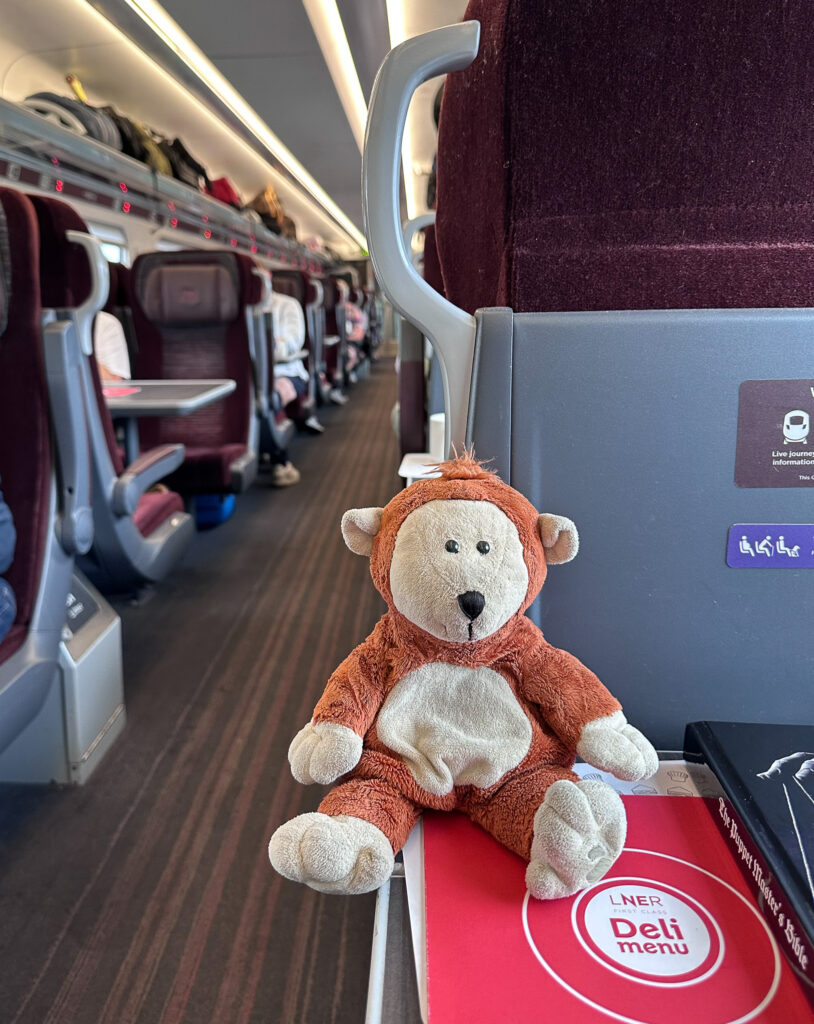
Buddy and Jordan
Have you traveled on LNER or taken the train in England? We’d love to hear about your experience in the comments. And if you’re planning a UK trip, check out our England destination page for activities, restaurants, and lodging recommendations.