
The EES Mess: Why Your Line Through European Passport Control Is Taking Hours This Summer
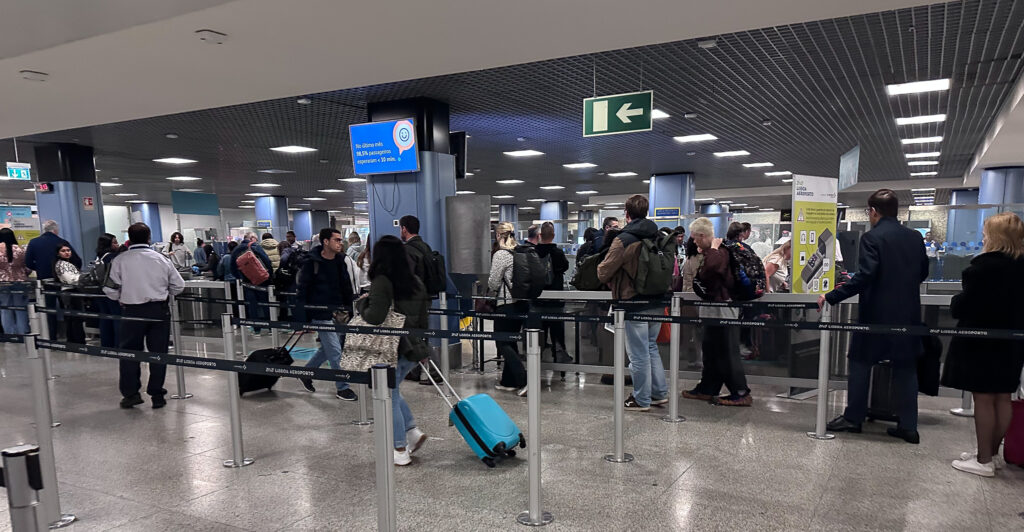
If you’ve flown into Europe this summer, or you’re about to, brace yourself. The line at passport control may be the longest part of your entire trip — longer than the flight itself, in some cases.
I covered the basics of the EU’s Entry/Exit System (EES) back in April when it reached full rollout. What I want to talk about today isn’t the “what” — it’s the mess it’s actually causing on the ground right now, based on what airports, airlines, and travelers are reporting this summer. No, I have not personally gone through an EES line yet this season. This a roundup of what’s being reported rather than a firsthand account — I want to keep you updated on serious travel issues.
What’s Actually Happening
EES reached full operation at every Schengen external border on April 10, 2026. Since then, non-EU travelers have been funneled into a slower biometric process. Your fingerprints and a facial scan, on top of the usual passport check. Airports Council International Europe has recorded waits of up to three and a half hours during peak periods. The International Air Transport Association has warned that delays could stretch to six hours at the busiest gateways in July and August, when traffic through Europe’s airports roughly doubles.
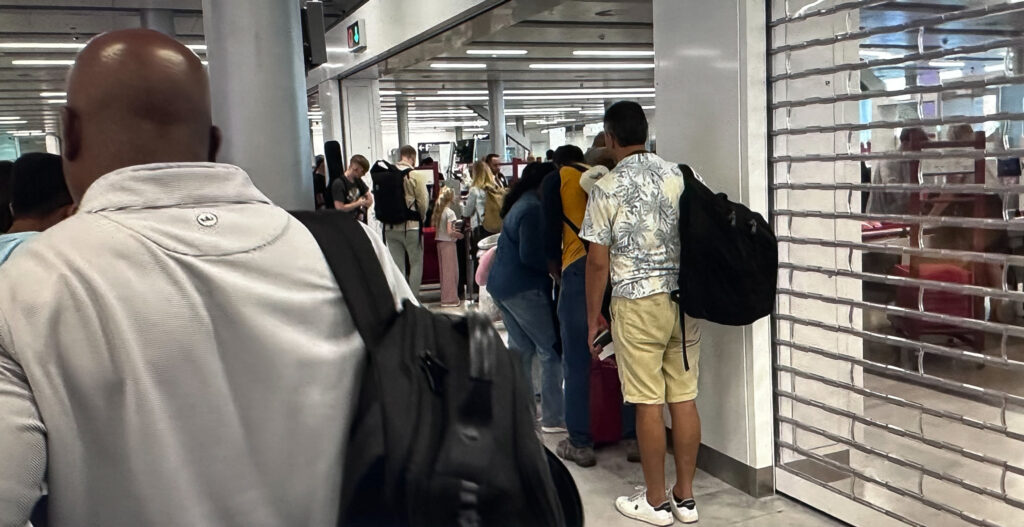 The rollout has been uneven. Some airports have adapted reasonably well. Others — Barcelona, Lisbon, and Paris among them — have been an unmitigated disaster. They have repeatedly had to pause biometric enrollment entirely just to clear the backlog. Portugal told Brussels in late May it will temporarily suspend biometric registration at its airports during peak periods, with suspensions of up to six hours at a time, renewable as needed.
Airports and airlines are pushing the European Commission to let member states keep suspending EES all the way through the end of October. As of late July, the Commission hadn’t granted that extension — it only confirmed the flexibility period runs no later than early September. If that extension doesn’t come through, the relief valve at fallback-friendly airports like Rome, Lisbon, and the Spanish hubs could disappear right as peak summer traffic peaks.
Why It’s Slow
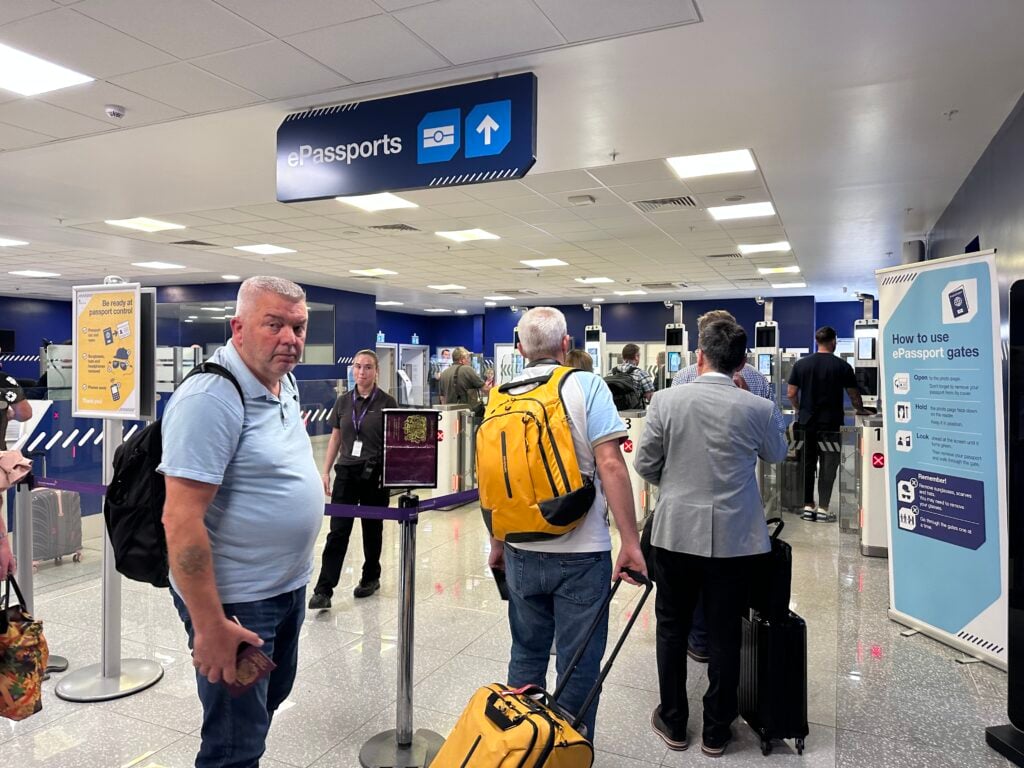 The biometric registration itself — fingerprints plus a facial scan — adds roughly three to seven minutes per traveler the first time through. That doesn’t sound like much until you multiply it across every non-EU arrival at a major hub during peak hours. The good news: once you’re registered, re-entry on a later trip is much faster, typically just a quick face check.
One Thing People Keep Getting Wrong
 EES is not the same as ETIAS, and mixing the two up is one of the most common mistakes I’m seeing right now. EES is the biometric border check that’s live today. ETIAS is a separate, roughly €20 online travel authorization that hasn’t launched yet — it’s expected sometime in the last quarter of 2026. You do not need ETIAS this summer. If you come across a site trying to sell you one right now, walk away — that’s a scam.
How I’m Adjusting the Flight Plan
This is exactly the kind of thing the Flight Plan Approach exists for — building real margin into your travel the way pilots build margin into a flight. My standing rule has been to add an hour at large international airports. Given what’s happening with EES this summer, I’d treat that as a floor, not a ceiling, for your first entry into the Schengen Area. A few practical adjustments:
- Build in extra time on your first Schengen entry of the trip. At least 2 extra hours. Every trip after that should move faster since you’ll already be registered.
- Watch tight connections through Paris CDG especially. It’s been named repeatedly as one of the worst-hit hubs. A short layover there this summer is a real risk, not a theoretical one.
- Check your specific airport before you fly. Conditions change day to day depending on staffing and whether biometric collection has been suspended.
- Don’t buy into ETIAS scams. It isn’t live. Save your money.
Europe is still absolutely worth the trip. Just go in with your eyes open, your Flight Plan built with real margin, and Buddy tucked in next to your passport where he belongs.

Buddy and Jordan
For the full breakdown of what EES and ETIAS are and how they work, see my earlier post: “EES and ETIAS Update: What You Need to Know Before Your Summer Trip to Europe.”