
York – An Amazing City!
Founded by the Romans as Eboracum in AD71, it became Jorvik in 866 when the Vikings captured the city. Ravaged by William the Conqueror in 1069, it eventually began to prosper as a major commerce center. By the Middle Ages, Medieval York was the second largest city in England. In 1968, York’s Central Historic Core was designated a conservation area. (www.cultus.hk)
Our first visit to York and we fell in love. The architecture reminds me of Bavaria and the ancient wall around the city center is a fun experience. The food is amazing and history comes alive. It is very walkable and vibrant, with the prestigious University of York located within. Known as the most haunted city in Europe, The York Ghost Merchants are world famous. Their ghosts are highly prized.
If you want to experience history, have fun, get your exercise on after an exceptional meal, pretend you’re a Viking and get your own ghost, York is a great weekend experience. If some of York seems familiar, parts of Downton Abbey were filmed here, and The Shambles street was the inspiration for Harry Potters’ Diagon Alley.
When To Visit:
-
High Season
- July and August are the busiest months, when the weather is warmest and school holidays bring families.
- Due to its supernatural reputation, the Halloween period draws enormous crowds as well.
- There are also increased crowds around Easter and during the Christmas market period (late November through December), when the city is particularly festive.
- The Viking festival in February also sees many visitors.
-
Shoulder Seasons
- Spring (April-May) and early autumn (September-October) offer a nice balance – decent weather, fewer crowds than summer, and attractions are fully open.
- Popular with visitors looking to avoid the peak season rush.
- The sweet spot for visiting – pleasant weather for exploring the medieval streets and city walls without the summer crowds, and accommodation prices are typically lower than peak season.
-
Christmas Season
- York at Christmas deserves a separate category.
- The York Christmas market, held in the shadow of the Minster, is widely considered one of the finest festive markets in England.
- The Shambles dressed in Christmas lights is genuinely magical — the medieval timber frames and overhanging buildings create a naturally atmospheric canopy impossible to replicate.
- As you can imagine, advance planning is absolutely essential.
-
Low Season
- January and February are the quietest months (except the Viking festival), with fewer tourists, shorter days, and colder weather.
- November (outside the Christmas market period) and early March also tend to be quieter.
-
Best Times
- Late September to early October is York at its best.
- Comfortable temperatures, beautiful light, manageable crowds, full attraction schedules and accommodation prices that haven’t yet climbed to summer peaks.
- The city feels settled and confident in itself in early autumn, and rewards visitors who pay close attention.
Activities:
 We arrived by train
The journey from Newcastle to York on the LNER East Coast Mainline is the kind of train ride that reminds you why travelling by rail through England is always the right decision. Comfortable, scenic and genuinely relaxing — the Yorkshire countryside arriving beyond the window like a slow, beautiful promise of everything that waits at the other end. Fast, straightforward and infinitely preferable to a motorway. Take the train.
 Walkable Shopping

York does not ease you in gently. From the moment you pass through the city walls, it makes its case immediately and without apology — medieval streets, extraordinary architecture, two thousand years of history compressed into a city centre compact enough to explore almost entirely on foot. The Shambles, Stonegate, the Shambles Market, the High Street and the Coppergate Centre form the retail heart of a place where even the act of shopping feels like a history lesson delivered in the most enjoyable possible way. Independent boutiques, eclectic finds and characterful facades at every turn. York is, quite simply, one of England’s most walkable, most rewarding and most completely itself cities. The only question is where to start.
 City Walls

If we were asked to name the single best free thing to do in York — walking the city walls would win without serious challenge. Nearly three miles of ancient walkway, sitting atop foundations first laid by Roman soldiers in AD 71 and added to by virtually every subsequent chapter of York’s extraordinary history right through to the 16th century. The views from the top are wonderful in every direction — York Minster rising above the rooftops, the medieval streets threading between the buildings below, the patchwork of gardens and courtyards that you’d never glimpse from street level. It’s the best possible way to get your bearings and fall properly in love with the city before you’ve spent a penny.
The walls contain four main gateways called Bars — Bootham Bar, Micklegate Bar, Monk Bar and Walmgate Bar — each with their own remarkable history and some still housing small museums within the gatehouse towers. One honest word of caution — some sections of the walkway are genuinely narrow and the footing can be uneven, particularly on older stretches and after wet weather. Comfortable shoes are non-negotiable and a steady pace is strongly recommended. The walls have stood for nearly two thousand years. They can wait while you take your time.
 York Ghost Merchants
Number 6 The Shambles. Remember it. York Ghost Merchants occupies one of the most perfectly appropriate addresses in a city that has been frightening and fascinating visitors in equal measure for two millennia. Europe’s most haunted city deserves a ghost shop that takes its craft seriously — and the Ghost Merchants deliver on every count. Every figure, available in 5cm and 8cm sizes, is handmade on the premises using water-based British materials, each one produced in strict observance of the time-honored traditions of the Sorrowful Guild of Master Ghost Makers. They are collectable, characterful and made with a level of care that turns a souvenir into something genuinely worth keeping.
One insider tip that will save you considerable time — there are two Ghost Merchants in York. The Shambles original is iconic and worth seeing for the setting alone, but the queues reflect its fame accordingly. The second store, a short walk away, carries the same full range with a fraction of the wait. Visit both if you can. If you can only manage one, let the length of the queue make the decision for you. We bought five. We have considered this carefully and stand by the decision entirely. Note: The shop’s handmade, limited availability nature means certain ghosts sell out regularly — it pays to be early.
 Jorvik Viking Center

Beneath the modern streets of York, an extraordinary secret has been waiting patiently for a thousand years — and the Jorvik Viking Centre on Coppergate Walk is where that secret finally comes to the surface. This is not a museum that imagines what Viking York might have looked like. This is a museum built directly on top of the archaeological evidence of what it actually was. The Coppergate excavation of 1976-1981 that preceded Jorvik’s opening uncovered one of the most significant Viking-age sites ever discovered anywhere in the world — the preserved remains of the 10th century city of Jorvik, complete with buildings, artifacts and organic material that had survived intact beneath the Coppergate soil for ten centuries.
The experience takes you underground and through those reconstructed streets in a way that is genuinely, unexpectedly immersive — the sights, the sounds and the atmosphere of Viking-age York rendered with an authenticity that decades of ongoing archaeological research has made possible. Costumed interpreters bring the human story to life at every turn, and the galleries house some of the most remarkable Viking artifacts you will find anywhere outside Scandinavia. Jorvik is one of those rare attractions that delivers everything it promises and then quietly exceeds it. Allow more time than you think you need. Pre-booking online during peak season will save you a long wait.
 Clifford’s Tower

Clifford’s Tower sits on its grassy mound above York like it has always owned the place — which, as the largest surviving part of what was once Northern England’s mightiest medieval fortress, it arguably has. We could talk about the history, architecture and centuries of drama these ancient walls have witnessed. But we would be doing you a disservice if we didn’t lead with the King’s Latrine. Installed for King Henry III in the mid-13th century on the tower’s highest floor, this is a piece of medieval engineering that is frankly ahead of its time by three full centuries — a wooden seat beneath a window, mounted above a stone-lined shaft, flushed by rainwater collected on the roof and channelled down a stone groove on the left hand side of the seat. A proto-flushing toilet, conceived in the 1200s, with a view. We laughed. We were impressed. And we were slightly humbled.
From there, the timber roof platform at the very top of the tower delivers the finest 360 degree view in York — the whole glorious sweep of the city, the Minster towers, the snaking walls and the countryside beyond, all laid out in extraordinary clarity. Stunning! English Heritage membership gives free entry to Clifford’s Tower, alongside hundreds of other historic sites across the country.
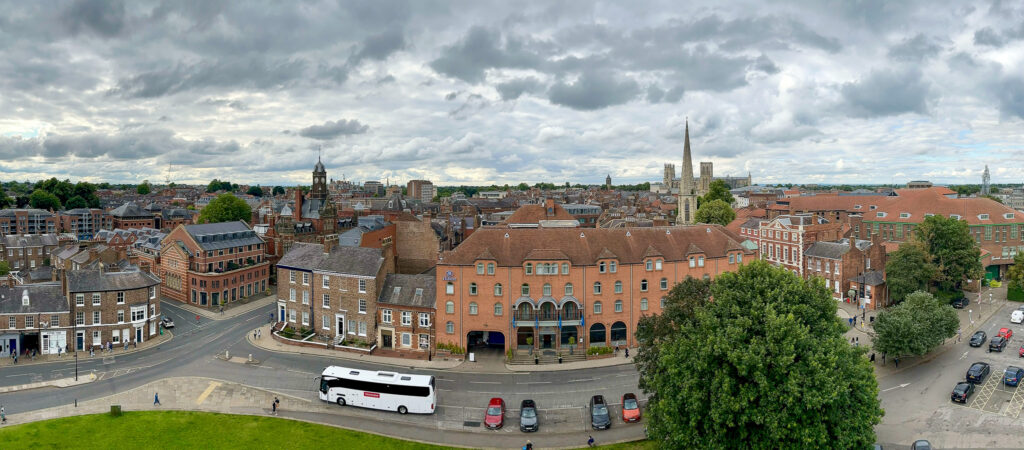

 York Castle Museum


If Clifford’s Tower is on your York itinerary — and it absolutely should be — then York Castle Museum next door is not so much a recommendation as an obligation. You are already there. You would be doing yourself a genuine disservice to leave without going in. The museum covers four hundred years of York’s past with the kind of confidence and creativity that only comes from decades of doing this exceptionally well. Kirkgate, the recreated Victorian street at its heart, stopped us in our tracks — a fully realized 19th century thoroughfare complete with period shops, domestic interiors and the particular atmospheric quality that separates a truly great museum experience from a merely good one.
The prison section is sobering and important — conditions in York Castle Gaol were exactly as grim as the history books suggest, and the museum presents that reality with appropriate seriousness. The Secrets of Dress and the Sixties exhibits provided a wonderful change of register — the former a beautifully curated journey through centuries of fashion, the latter a joyful, colorful celebration of a decade that changed everything. Kirkgate is particularly magical at Christmas when the museum runs its enormously popular Victorian Christmas experience. And the admission price for all of this? Genuinely, pleasantly surprising. York Castle Museum earns every penny and then some. Note: York Castle Museum and Clifford’s Tower together represent a natural full morning or afternoon pairing.
 York Minster


We have stood inside a great many cathedrals across England and Europe over the years. York Minster stopped us completely. There is a scale and a presence to this building that operates on a different level to almost anything else we have experienced — the twin towers visible from half the city, the interior opening up before you in a way that makes even the most seasoned cathedral visitor catch their breath and reach instinctively for a camera, knowing full well that the camera will not capture it. Climbing the 275 steps to the top of the Central Tower rewards you with the finest view in all of York.
Construction ran from 1220 to 1472 — over 250 years of continuous building, generation after generation of craftsmen contributing their lives’ work to something none of them would live to see completed. The stained glass alone would make York Minster unmissable. Britain’s largest collection of medieval stained glass fills the windows with extraordinary color and narrative detail, and the Great East Window — depicting the beginning and end of the world across hundreds of individual panels — is simply one of the most astonishing things we have ever looked at.
The undercroft museum beneath the cathedral floor takes the story back even further, walking you through excavated Roman barracks and Norman foundations that reveal York’s unbroken two thousand year history in the most literal possible way. The medieval Chapter House is a separate marvel — geometric, serene and so perfectly proportioned that it feels almost impossible that human hands made it without modern tools or technology. York Minster is an active place of worship, so do check visiting hours before you go. And go. Whatever else you do or don’t see in York, go.


Food:
 Unfortunately, Buddy and I were only in York for the weekend, visiting our friend Eve, who was at the University of York. She knew all of the local eateries, especially on a budget, as well as fancy places. Below are our favorite restaurants. We also have several recommendations at the end we will visit on our next trip. Bon Appetit!
 The Fat Badger
York Minster is an amazing experience. The Fat Badger on High Petergate, mere steps away, is the ideal place to process all of it over something excellent. A proper Yorkshire pub with a beer garden enclosed within historic walls, that the pub claims is the finest in York. On a warm summer afternoon, it is difficult to mount a serious argument against that claim. The Badger Beef Burger is exactly what a good pub burger should be — generous and entirely satisfying. The Alta Vista Vive Malbec went perfectly with our burger and proves The Fat Badger takes its list as seriously as its kitchen. Ideally located for virtually every major attraction in the city centre. The kind of characterful pub that a long day in one of England’s greatest cities deserves at its natural pause point. Order another glass. The Minster will still be there.
 Howl
Howl
Not every great discovery in York comes with a medieval facade and a thousand years of history attached. Some come in the form of a quietly exceptional wine bar in the Coppergate Shopping Centre you might easily walk past without a second glance. That would be a considerable mistake. Howl specializes in low-intervention wines from small independent vineyards, served with the kind of unpretentious enthusiasm that distinguishes a genuinely good wine bar from one that merely stocks an interesting list. A stable core selection, an ever-changing roster of specials and a food menu of seasonal plates, cheese and charcuterie that understands its supporting role perfectly. The Gran Cerdo Viura with an individual charcuterie plate was a pairing of quiet brilliance — light, considered and entirely satisfying. Living North called it one of York’s five best wine bars. We would simply call it essential.
 Keystones York
Keystones York on Monkgate is a genuinely lovely pub — quirky inside, beautiful outside, with a beer garden that sits alongside the ancient city walls in a way that makes every drink feel like a history lesson delivered in the most enjoyable possible format. The craft beers and cask ales are well chosen, but for us wine lovers, the wine list holds up admirably. A good red alongside one of Keystones’ burgers is, quite simply, one of the best we had in York. Few pub lunch settings in England can compete with 16th century city walls rising above your table in the midday sun. If the city walls walk is on your York itinerary — and it absolutely should be — make Monkgate your stopping point.
Recommended:
- Skosh Upscale British fare with an international influence.
- Rustique Rustic French cooking in a Bistro atmosphere.
- Turtle Bay York Caribbean restaurant and bar in the heart of York.
- Fish and Forest Cozy restaurant specializing in fish and game.
Lodging:

For our York weekend, Buddy and I chose the Hampton by Hilton on Toft Green — convenient for the train station, reliable on every count that matters, and a natural choice for Hilton Honors members who know exactly what the brand delivers. The breakfast buffet alone justifies an early alarm — generous, well stocked and genuinely excellent. The hotel sits just outside the city walls and across the river, but the walk into the historic centre is easy and pleasant, and Ubers are never more than a few minutes away when the day’s sightseeing has taken its toll. A comfortable, well-located York base that does everything it promises without fuss or complication.
There are many places to stay in York, depending on your preferences. When we return, we will consider hotels that are inside the City Walls, north of the river.
Our top two choices would be: Grays Court Hotel 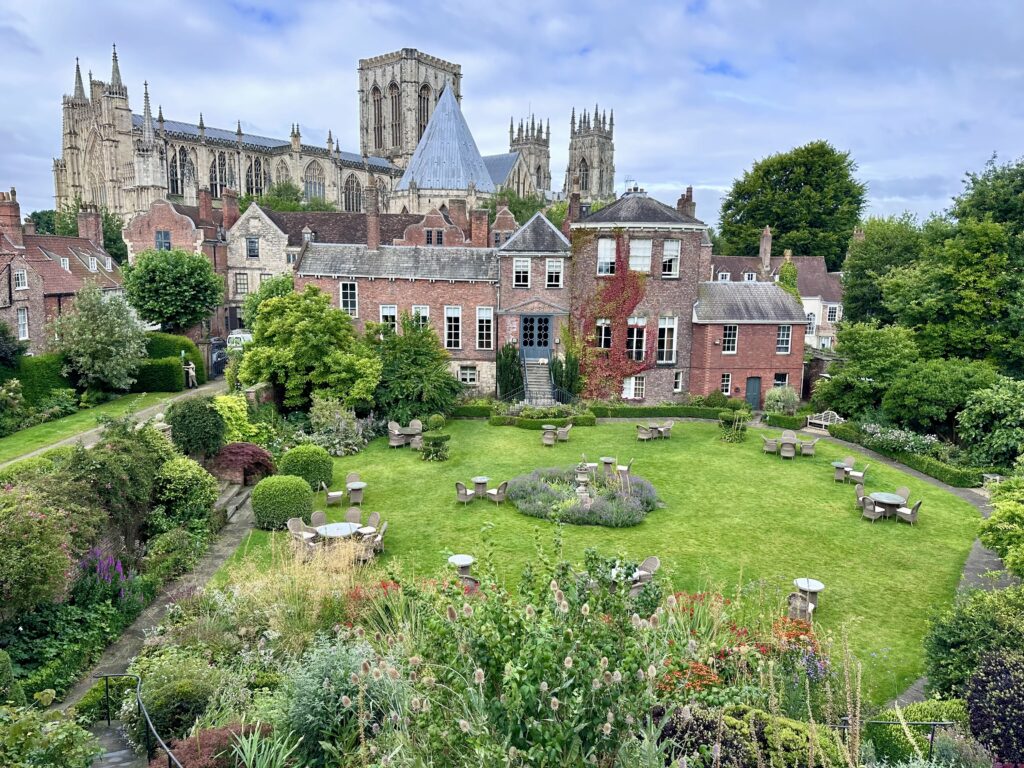 next to the City Wall and York Minster, and
Hilton York  next to Clifford’s Tower.
However, Dean Court York, The Judge’s Lodging, Hotel Indigo York, Galtres Lodge Hotel, The Fat Badger, and Guy Fawkes Inn are all highly rated.
Planning our return visit
We came to York for a weekend and left with one of our favourite cities in all of England firmly added to the list. Two days gave us the walls, the Minster, the Viking streets beneath Coppergate, the Ghost Merchants, the castle museum, banging pub burgers and a wine bar in a shopping centre that genuinely surprised us. And still the list of things we didn’t quite get to is longer than we’d like. York does that. It gives generously and holds enough back to make the return feel not just appealing but genuinely necessary. Ours is already planned — a December visit for the Christmas market, because a city this beautiful dressed in festive lights and medieval atmosphere is an experience we simply cannot justify missing any longer. If England is on your travel horizon, York is not optional. It is, without question, essential.

Buddy & Jordan
Have you visited York? We’d love to hear about your experience in the comments. If you found this helpful, join our Newsletter for weekly travel tips delivered straight to your inbox.